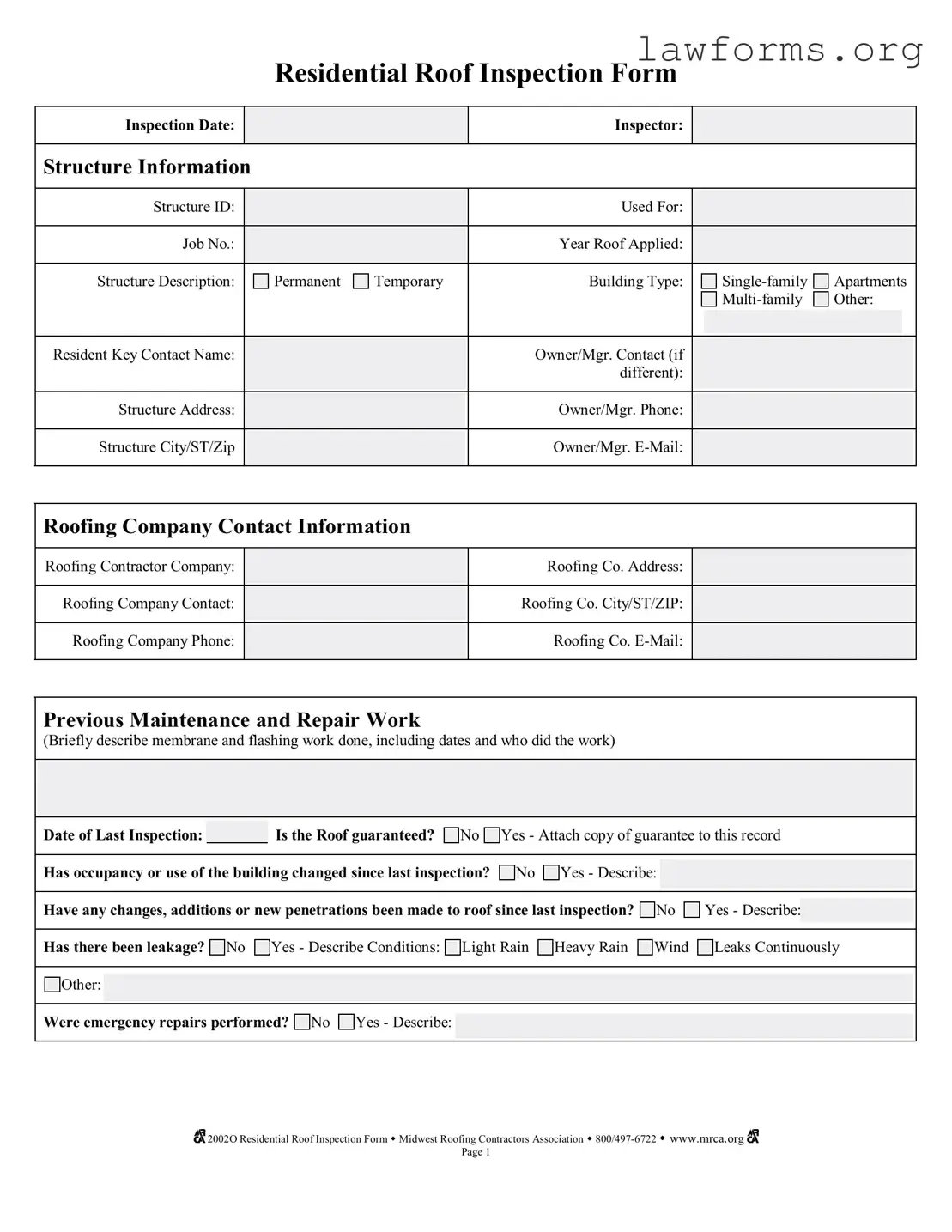
Fill Out a Valid Roof Inspection Template
Form Specs
| Fact Name | Description |
|---|---|
| Inspection Date | The form requires the date when the roof inspection is conducted, ensuring accurate record-keeping. |
| Inspector Information | Details about the inspector, including their name, must be provided for accountability and reference. |
| Structure Details | Information such as Structure ID, job number, and description is necessary to identify the specific building being inspected. |
| Roofing Company Contact | The form collects contact information for the roofing contractor, ensuring communication can be maintained. |
| Previous Maintenance | A section is dedicated to documenting past maintenance and repair work, which is crucial for understanding the roof's history. |
| Leakage Assessment | The inspector must note any leakage issues, including conditions like light rain or heavy rain, to evaluate the roof's integrity. |
| Emergency Repairs | Any emergency repairs performed should be documented to provide a complete picture of the roof's condition and response actions. |
| Condition Codes | Inspectors use codes (Good, Fair, Poor) to assess various roof components, facilitating clear communication about the roof's state. |
| Photographic Records | Photographic evidence can be attached to the form, supporting the findings and providing visual documentation. |
| State-Specific Laws | In some states, specific laws govern roof inspections, which may require adherence to local building codes and regulations. |
Dos and Don'ts
When filling out the Roof Inspection form, it is essential to approach the task with care and attention to detail. Here are some important guidelines to follow:
- Do ensure all required fields are completed accurately, including inspection date and inspector's name.
- Do describe any previous maintenance and repair work thoroughly, including dates and who performed the work.
- Do indicate any changes to the building's occupancy or use since the last inspection.
- Do document any leaks or conditions observed during the inspection, specifying the severity and circumstances.
- Don't leave any fields blank that require information; incomplete forms can lead to misunderstandings.
- Don't forget to attach any guarantees if the roof is under warranty.
- Don't rush through the inspection; take your time to observe all areas of the roof and structure.
- Don't ignore any signs of damage or wear; even minor issues can lead to significant problems if not addressed.
Other PDF Documents
How to Create a Column Graph in Excel - Connection to Topic: How each detail relates to the overarching theme or issue.
In addition to understanding the importance of the Washington Motor Vehicle Bill of Sale, individuals seeking a reliable template for this document can visit Forms Washington, where they can find resources that simplify the process of drafting and completing the necessary paperwork efficiently.
Employee Change Form Template - Records change of department or organizational unit for an employee.
Common mistakes
-
Incomplete Structure Information: Failing to provide all necessary details such as Structure ID, Year Roof Applied, or Building Type can lead to confusion and delays in the inspection process.
-
Neglecting Previous Maintenance History: Omitting information about past repairs or maintenance work can hinder the inspector's ability to assess the roof's current condition effectively.
-
Inaccurate Contact Information: Providing incorrect or outdated contact details for the owner or roofing company may result in communication issues during the inspection process.
-
Failure to Attach Guarantees: If the roof is guaranteed, not attaching a copy of the guarantee can complicate any claims or repairs needed in the future.
-
Ignoring Changes in Building Use: Not mentioning any changes in occupancy or use since the last inspection may overlook important factors affecting the roof's condition.
-
Omitting Descriptions of Leaks: If leakage has occurred, failing to describe the conditions under which it happened can lead to incomplete assessments and ineffective repairs.
-
Not Documenting Emergency Repairs: If emergency repairs were performed, neglecting to describe them can obscure the roof's maintenance history and current state.
-
Mislabeling Condition Codes: Using incorrect condition codes (G, F, P) for various roof components can mislead the inspector and result in inappropriate action being taken.
Documents used along the form
When conducting a roof inspection, several other forms and documents may be beneficial to ensure a comprehensive understanding of the roof's condition and history. These documents provide valuable context and support for the findings of the Roof Inspection Form. Below is a list of commonly used documents that complement the roof inspection process.
- Maintenance Log: This document tracks all maintenance activities performed on the roof, including routine inspections, repairs, and any work completed by contractors. It helps establish a history of care and can highlight recurring issues that may need attention.
- Warranty Information: A warranty document outlines the terms and conditions of the roof's warranty, including coverage details and duration. It is essential to have this on hand to understand what repairs or replacements may be covered under the warranty.
- Previous Inspection Reports: These reports provide insights into the roof's condition over time. Reviewing past inspections can help identify trends in deterioration or improvements made after previous repairs.
- Repair Estimates: This document includes cost estimates for any necessary repairs identified during the inspection. Having a clear understanding of potential expenses can assist in budget planning and decision-making regarding repairs.
- Non-compete Agreement Form: To protect business interests, utilize the necessary Non-compete Agreement guidelines to prevent former employees from competing unfairly.
- Contractor Proposals: If repairs or maintenance work is needed, proposals from roofing contractors detail the scope of work, timelines, and costs. This information is crucial for selecting the right contractor and ensuring that the work aligns with the inspection findings.
Utilizing these documents alongside the Roof Inspection Form can lead to a more thorough assessment and informed decision-making regarding roof maintenance and repairs. Keeping them organized and accessible will facilitate better management of roofing issues over time.
Misconceptions
- Misconception 1: The Roof Inspection form is only necessary for older roofs.
- Misconception 2: A roof inspection is the same as a roof appraisal.
- Misconception 3: Roof inspections are only for homeowners.
- Misconception 4: A roof inspection guarantees that there will be no future leaks.
- Misconception 5: All roof inspectors have the same level of expertise.
- Misconception 6: Roof inspections are too expensive and not worth the cost.
- Misconception 7: A roof inspection only involves looking at the roof surface.
- Misconception 8: Roof inspections are unnecessary if there are no visible problems.
- Misconception 9: The inspection form is just a formality and does not provide valuable information.
This is not true. Regardless of the age of a roof, regular inspections are crucial. New roofs can develop issues due to installation errors or material defects, and timely inspections can help catch these problems early.
While both processes involve assessing the roof, they serve different purposes. An inspection focuses on the current condition and potential issues, whereas an appraisal evaluates the roof's value for real estate purposes.
This is a common misunderstanding. Property managers, commercial building owners, and real estate agents also benefit from roof inspections to ensure the integrity and safety of their properties.
No inspection can provide a 100% guarantee against future leaks. Inspections identify current issues, but unforeseen circumstances, such as severe weather, can still lead to problems.
Qualifications can vary significantly among inspectors. It is essential to choose a certified professional with experience specific to the type of roofing material and structure being inspected.
While there is a cost associated with inspections, they can save money in the long run by identifying issues early, preventing costly repairs, and extending the life of the roof.
Inspectors evaluate various components, including the interior roof deck, drainage systems, and penetrations. A comprehensive inspection assesses the entire roofing system.
Many roofing issues are not visible from the ground. Regular inspections help uncover hidden problems that could lead to significant damage if left unaddressed.
The Roof Inspection form is a critical document that provides a detailed account of the roof's condition. It serves as a record for future inspections and can help in making informed decisions regarding maintenance and repairs.
Preview - Roof Inspection Form

Residential Roof Inspection Form
Inspection Date: |
|
Inspector: |
|
|
|
|
|
|
|
Structure Information
Structure ID: |
|
|
Used For: |
|
|
|
|
|
|
|
|
|
|
|
|
|
|
Job No.: |
|
|
Year Roof Applied: |
|
|
|
|
|
|
|
|
|
|
|
|
|
|
Structure Description: |
Permanent |
Temporary |
Building Type: |
|
Apartments |
|||
|
|
|
|
|
Other: |
|||
|
|
|
|
|
|
|
|
|
|
|
|
|
|
|
|
|
|
|
|
|
|
|
|
|
|
|
Resident Key Contact Name: |
|
|
Owner/Mgr. Contact (if |
|
|
|
|
|
|
|
|
|
|
|
|
||
|
|
|
different): |
|
|
|
|
|
|
|
|
|
|
|
|
|
|
|
|
|
|
|
|
|
|
|
Structure Address: |
|
|
Owner/Mgr. Phone: |
|
|
|
|
|
|
|
|
|
|
|
|
|
|
|
|
|
|
|
|
|
|
|
Structure City/ST/Zip |
|
|
Owner/Mgr. |
|
|
|
|
|
|
|
|
|
|
|
|
||
|
|
|
|
|
|
|
|
|
|
|
|
|
|
|
|
|
|
Roofing Company Contact Information
Roofing Contractor Company: |
|
Roofing Co. Address: |
|
|
|
|
|
|
|
Roofing Company Contact: |
|
Roofing Co. City/ST/ZIP: |
|
|
|
|
|
|
|
|
|
|
|
|
Roofing Company Phone: |
|
Roofing Co. |
|
|
|
|
|
||
|
|
|
|
|
|
|
|
|
|
Previous Maintenance and Repair Work
(Briefly describe membrane and flashing work done, including dates and who did the work)
Date of Last Inspection: |
|
Is the Roof guaranteed? |
No |
Yes - Attach copy of guarantee to this record |
||||||||
|
|
|
|
|
|
|
|
|
|
|||
|
|
|
|
|
|
|
||||||
Has occupancy or use of the building changed since last inspection? |
No |
Yes - Describe: |
|
|
|
|
||||||
|
|
|
|
|
|
|
|
|
||||
|
|
|
|
|
|
|
|
|
|
|
|
|
|
|
|
|
|||||||||
Have any changes, additions or new penetrations been made to roof since last inspection? |
No |
Yes - Describe: |
|
|
||||||||
|
|
|
|
|
|
|
|
|
|
|
|
|
Has there been leakage? No |
Yes - Describe Conditions: |
Light Rain |
Heavy Rain |
Wind |
Leaks Continuously |
|||||||
|
|
|
|
|
|
|
|
|
|
|
|
|
|
|
|
|
|
|
|
|
|
|
|
||
Other: |
|
|
|
|
|
|
|
|
|
|
|
|
|
|
|
|
|
|
|
|
|
|
|
|
|
|
|
|
|
|
|
|
|
|
|
|
|
|
Were emergency repairs performed? No |
Yes - Describe: |
|
|
|
|
|
|
|
|
|||
|
|
|
|
|
|
|
|
|||||
|
|
|
|
|
|
|
|
|
|
|
|
|
 2002O Residential Roof Inspection Form w Midwest Roofing Contractors Association w
Page 1
Residential Roof Inspection Form
Code |
|
|
|
Condition |
|
||||
|
|
|
|
G = Good, No Action |
|
||||
|
|
|
|
F = Fair, Monitor Periodically |
|
||||
|
|
|
|
P = Poor, Immediate Action |
|
||||
|
|
|
|
|
|
|
|
|
|
|
|
|
|
G |
F |
P |
Location |
Action Taken |
|
|
|
|
|
|
|
|
|
|
|
|
Interior |
|
|
|
|
|
|
||
|
|
|
|
|
|
|
|
|
|
|
Roof Deck |
|
|
|
|
|
|
||
|
|
|
|
|
|
|
|
|
|
A1 |
Corrosion |
|
|
|
|
|
|
||
|
|
|
|
|
|
|
|
|
|
A2 |
Spalling (chipping or crumbling) |
|
|
|
|
|
|
||
|
|
|
|
|
|
|
|
|
|
A3 |
Cracking |
|
|
|
|
|
|
||
|
|
|
|
|
|
||||
|
|
|
|
|
|
|
|
|
|
A4 |
Buckling |
|
|
|
|
|
|
||
|
|
|
|
|
|
||||
|
|
|
|
|
|
|
|
|
|
A5 |
Sagging |
|
|
|
|
|
|
||
|
|
|
|
|
|
||||
|
|
|
|
|
|
|
|
|
|
|
|
|
|
|
|
|
|
|
|
A6 |
Open Joints |
|
|
|
|
|
|
||
|
|
|
|
|
|
||||
|
|
|
|
|
|
|
|
|
|
|
|
|
|
|
|
|
|
|
|
A7 |
General Deck Condition |
|
|
|
|
|
|
||
|
|
|
|
|
|
||||
|
|
|
|
|
|
|
|
|
|
|
|
|
|
|
|
|
|
|
|
A8 |
Stains/Drips |
|
|
|
|
|
|
||
|
|
|
|
|
|
||||
|
|
|
|
|
|
|
|
|
|
|
|
|
|
|
|
|
|
|
|
|
|
|
|
|
|
|
|
|
|
A100 |
Other: |
|
|
|
|
|
|
|
|
|
|
|
|
|
|
|
|
|
|
|
|
|
|
|
|
|
|
|
|
|
Walls |
|
|
|
|
|
|
||
|
|
|
|
|
|
|
|
|
|
B1 |
Movement |
|
|
|
|
|
|
||
|
|
|
|
|
|
|
|
|
|
B2 |
Settling |
|
|
|
|
|
|
||
|
|
|
|
|
|
|
|
|
|
B3 |
Cracks |
|
|
|
|
|
|
||
|
|
|
|
|
|
|
|
|
|
B4 |
Spalling (chipping or crumbling) |
|
|
|
|
|
|
||
|
|
|
|
|
|
|
|
|
|
|
|
|
|
|
|
|
|
|
|
B5 |
Paint Peeling |
|
|
|
|
|
|
||
|
|
|
|
|
|
|
|
|
|
B6 |
Water Stains |
|
|
|
|
|
|
||
|
|
|
|
|
|
|
|
|
|
B100 |
Other: |
|
|
|
|
|
|
|
|
|
|
|
|
|
|
|
|
|
|
|
|
|
|
|
|
|
|
|
|
|
Exterior |
|
|
|
|
|
|
||
|
|
|
|
|
|
|
|
|
|
|
Walls |
|
|
|
|
|
|
||
|
|
|
|
|
|
|
|
|
|
C1 |
Deteriorated Mortar Joints |
|
|
|
|
|
|
||
|
|
|
|
|
|
|
|
|
|
 2002O Residential Roof Inspection Form w Midwest Roofing Contractors Association w
Page 2

Residential Roof Inspection Form
Code |
|
|
|
|
|
Condition |
|
|
|
||||
|
|
|
|
|
|
G = Good, No Action |
|
|
|
||||
|
|
|
|
|
|
F = Fair, Monitor Periodically |
|
|
|
||||
|
|
|
|
|
|
P = Poor, Immediate Action |
|
|
|
||||
|
|
|
|
|
|
|
|
|
|
|
|
|
|
|
|
|
|
|
|
G |
F |
P |
Location |
|
Action Taken |
||
|
|
|
|
|
|
|
|
|
|
|
|
|
|
C2 |
Settlement Cracks |
|
|
|
|
|
|
|
|
||||
|
|
|
|
|
|
|
|
|
|
|
|
|
|
C3 |
Stains |
|
|
|
|
|
|
|
|
||||
|
|
|
|
|
|
|
|
|
|
|
|
|
|
C4 |
Efflorescence |
|
|
|
|
|
|
|
|
||||
|
|
|
|
|
|
|
|
|
|
|
|
|
|
C5 |
Windows |
|
|
|
|
|
|
|
|
||||
|
|
|
|
|
|
|
|
|
|
|
|
|
|
C7 |
Fascia Displaced |
|
|
|
|
|
|
|
|
||||
|
|
|
|
|
|
|
|
|
|
|
|
|
|
|
|
|
|
|
|
|
|
|
|
|
|
|
|
|
Metal Flashings |
|
|
|
|
|
|
|
|
||||
|
|
|
|
|
|
|
|
|
|
|
|
|
|
|
Counter Flashing |
|
|
|
|
|
|
|
|
||||
|
|
|
|
|
|
|
|
|
|
|
|
|
|
E1 |
Loose/Missing Fasteners |
|
|
|
|
|
|
|
|
||||
|
|
|
|
|
|
|
|
||||||
|
|
|
|
|
|
|
|
|
|
|
|
|
|
|
|
|
|
|
|
|
|
|
|
|
|
|
|
E2 |
Loose/Displaced Metal |
|
|
|
|
|
|
|
|
||||
|
|
|
|
|
|
|
|
|
|
|
|
|
|
|
|
|
|
|
|
|
|
|
|
|
|
|
|
E3 |
Deformed Metal |
|
|
|
|
|
|
|
|
||||
|
|
|
|
|
|
|
|
|
|
|
|
|
|
|
|
|
|
|
|
|
|
|
|
|
|
|
|
E4 |
Corrosion |
|
|
|
|
|
|
|
|
||||
|
|
|
|
|
|
|
|
|
|
|
|
|
|
|
|
|
|
|
|
|
|
|
|
|
|
|
|
E6 |
Sealant Joints |
|
|
|
|
|
|
|
|
||||
|
|
|
|
|
|
|
|
||||||
|
|
|
|
|
|
|
|
|
|
|
|
|
|
|
|
|
|
|
|
|
|
|
|
|
|
|
|
E7 |
Punctures |
|
|
|
|
|
|
|
|
||||
|
|
|
|
|
|
|
|
||||||
|
|
|
|
|
|
|
|
|
|
|
|
|
|
E100 |
Other: |
|
|
|
|
|
|
|
|
|
|
|
|
|
|
|
|
|
|
|
|
|
|
|
|
|
|
|
|
|
|
|
|
|
|
|
|
|
|
|
|
|
Drains/Downspouts |
|
|
|
|
|
|
|
|
||||
|
|
|
|
|
|
|
|
|
|
|
|
|
|
L1 |
Strainers/Clamping Ring |
|
|
|
|
|
|
|
|
||||
|
|
|
|
|
|
|
|
||||||
|
|
|
|
|
|
|
|
|
|
|
|
|
|
|
|
|
|
|
|
|
|
|
|
|
|
|
|
L2 |
Clear of Debris |
|
|
|
|
|
|
|
|
||||
|
|
|
|
|
|
|
|
||||||
|
|
|
|
|
|
|
|
|
|
|
|
|
|
|
|
|
|
|
|
|
|
|
|
|
|
|
|
L3 |
Flashing |
|
|
|
|
|
|
|
|
||||
|
|
|
|
|
|
|
|
||||||
|
|
|
|
|
|
|
|
|
|
|
|
|
|
|
|
|
|
|
|
|
|
|
|
|
|
|
|
L4 |
Overall Cleanliness |
|
|
|
|
|
|
|
|
||||
|
|
|
|
|
|
|
|
|
|
|
|
|
|
|
|
|
|
|
|
|
|
|
|
|
|
|
|
L5 |
Gutter Anchors |
|
|
|
|
|
|
|
|
||||
|
|
|
|
|
|
|
|
|
|
|
|
|
|
|
|
|
|
|
|
|
|
|
|
|
|
|
|
L6 |
Drains/Downspouts |
|
|
|
|
|
|
|
|
||||
|
|
|
|
|
|
|
|
|
|
|
|
|
|
|
|
|
|
|
|
|
|
|
|
|
|
|
|
L7 |
Gutter General Condition |
|
|
|
|
|
|
|
|
||||
|
|
|
|
|
|
|
|
||||||
|
|
|
|
|
|
|
|
|
|
|
|
|
|
|
|
|
|
|
|
|
|
|
|
|
|
|
|
|
|
|
|
|
|
|
|
|
|
||||
L100 |
Other: |
|
|
|
|
|
|
|
|
|
|
||
|
|
|
|
|
|
|
|
|
|
|
|
|
|
|
|
|
|
|
|
|
|
|
|
|
|
|
|
 2002O Residential Roof Inspection Form w Midwest Roofing Contractors Association w
Page 3

Residential Roof Inspection Form
Code |
|
|
|
|
|
|
Condition |
|
|
||||
|
|
|
|
|
|
|
G = Good, No Action |
|
|
||||
|
|
|
|
|
|
|
F = Fair, Monitor Periodically |
|
|
||||
|
|
|
|
|
|
|
P = Poor, Immediate Action |
|
|
||||
|
|
|
|
|
|
|
|
|
|
|
|
|
|
|
|
|
|
|
|
|
G |
F |
P |
Location |
Action Taken |
||
|
|
|
|
|
|
|
|
|
|
|
|
|
|
|
Penetrations |
|
|
|
|
|
|
|
|||||
|
|
|
|
|
|
|
|
|
|
|
|
|
|
|
General |
|
|
|
|
|
|
|
|||||
|
|
|
|
|
|
|
|
|
|
|
|
|
|
K1 |
Pitch Pocket Sealant |
|
|
|
|
|
|
|
|||||
|
|
|
|
|
|
|
|||||||
|
|
|
|
|
|
|
|
|
|
|
|
|
|
|
|
|
|
|
|
|
|
|
|
|
|
|
|
K2 |
Loose Flashing |
|
|
|
|
|
|
|
|||||
|
|
|
|
|
|
|
|
|
|
|
|
|
|
|
|
|
|
|
|
|
|
|
|
|
|
|
|
K3 |
Drawbands |
|
|
|
|
|
|
|
|||||
|
|
|
|
|
|
|
|
|
|
|
|
|
|
|
|
|
|
|
|
|
|
|
|
|
|
|
|
|
|
|
|
|
|
|
|
|
|
|
|||
K100 |
Other: |
|
|
|
|
|
|
|
|
|
|
|
|
|
|
|
|
|
|
|
|
|
|
|
|
|
|
|
|
|
|
|
|
|
|
|
|
|
|
|
|
|
Conduit or Pipe |
|
|
|
|
|
|
|
|||||
|
|
|
|
|
|
|
|
|
|
|
|
|
|
N1 |
Sagging |
|
|
|
|
|
|
|
|||||
|
|
|
|
|
|
|
|
|
|
|
|
|
|
N2 |
Supports Moving |
|
|
|
|
|
|
|
|||||
|
|
|
|
|
|
|
|
|
|
|
|
|
|
N3 |
Joints |
|
|
|
|
|
|
|
|||||
|
|
|
|
|
|
|
|
|
|
|
|
|
|
|
|
|
|
|
|
|
|
|
|
|
|
|
|
N4 |
Corrosion |
|
|
|
|
|
|
|
|||||
|
|
|
|
|
|
|
|
|
|
|
|
|
|
|
|
|
|
|
|
|
|
|
|
|
|
|
|
N100 |
Other: |
|
|
|
|
|
|
|
|
|
|
||
|
|
|
|
|
|
|
|
|
|
|
|
|
|
|
|
|
|
|
|
|
|
|
|
|
|
|
|
|
|
|
|
|
|
|
|
|
|
|
|
|
|
|
Membrane/Shingle |
|
|
|
|
|
|
|
|||||
|
|
|
|
|
|
|
|
|
|
|
|
|
|
|
General |
|
|
|
|
|
|
|
|||||
|
|
|
|
|
|
|
|
|
|
|
|
|
|
O1 |
Discoloration |
|
|
|
|
|
|
|
|||||
|
|
|
|
|
|
|
|
|
|
|
|
|
|
|
|
|
|
|
|
|
|
|
|
|
|
|
|
O2 |
Coating/Surfacing |
|
|
|
|
|
|
|
|||||
|
|
|
|
|
|
|
|||||||
|
|
|
|
|
|
|
|
|
|
|
|
|
|
O3 |
Cracking |
|
|
|
|
|
|
|
|||||
|
|
|
|
|
|
|
|
|
|
|
|
|
|
O4 |
Wrinkles |
|
|
|
|
|
|
|
|||||
|
|
|
|
|
|
|
|
|
|
|
|
|
|
O5 |
Punctures |
|
|
|
|
|
|
|
|||||
|
|
|
|
|
|
|
|
|
|
|
|
|
|
O9 |
Delamination |
|
|
|
|
|
|
|
|||||
|
|
|
|
|
|
|
|
|
|
|
|
|
|
|
|
|
|
|
|
|
|
|
|
|
|
|
|
O10 |
Alligatoring |
|
|
|
|
|
|
|
|||||
|
|
|
|
|
|
|
|||||||
|
|
|
|
|
|
|
|
|
|
|
|
|
|
|
|
|
|
|
|
|
|
|
|
|
|
|
|
O11 |
Granule Adhesion |
|
|
|
|
|
|
|
|||||
|
|
|
|
|
|
|
|||||||
|
|
|
|
|
|
|
|
|
|
|
|
|
|
|
|
|
|
|
|
|
|
|
|
|
|
|
|
O12 |
Standing Water |
|
|
|
|
|
|
|
|||||
|
|
|
|
|
|
|
|||||||
|
|
|
|
|
|
|
|
|
|
|
|
|
|
|
|
|
|
|
|
|
|
|
|
|
|
|
|
 2002O Residential Roof Inspection Form w Midwest Roofing Contractors Association w
Page 4

Residential Roof Inspection Form
Code |
|
|
|
Condition |
|
||||
|
|
|
|
G = Good, No Action |
|
||||
|
|
|
|
F = Fair, Monitor Periodically |
|
||||
|
|
|
|
P = Poor, Immediate Action |
|
||||
|
|
|
|
|
|
|
|
|
|
|
|
|
|
G |
F |
P |
Location |
Action Taken |
|
|
|
|
|
|
|
|
|
|
|
O13 |
Vandalism |
|
|
|
|
|
|
||
|
|
|
|
|
|
||||
|
|
|
|
|
|
|
|
|
|
|
|
|
|
|
|
|
|
|
|
O14 |
Foot Traffic Damage |
|
|
|
|
|
|
||
|
|
|
|
|
|
||||
|
|
|
|
|
|
|
|
|
|
|
|
|
|
|
|
|
|
|
|
O17 |
Mechanical Damage |
|
|
|
|
|
|
||
|
|
|
|
|
|
|
|
|
|
|
|
|
|
|
|
|
|
|
|
O18 |
Exposed Felt/Deck |
|
|
|
|
|
|
||
|
|
|
|
|
|
||||
|
|
|
|
|
|
|
|
|
|
|
|
|
|
|
|
|
|
|
|
O19 |
Hail Damage |
|
|
|
|
|
|
||
|
|
|
|
|
|
||||
|
|
|
|
|
|
|
|
|
|
|
|
|
|
|
|
|
|
|
|
|
|
|
|
|
|
|
|
|
|
O100 |
Other: |
|
|
|
|
|
|
|
|
|
|
|
|
|
|
|
|
|
|
|
|
|
|
|
|
|
|
|
|
|
Miscellaneous |
|
|
|
|
|
|
||
|
|
|
|
|
|
|
|
|
|
R1 |
Antennas |
|
|
|
|
|
|
||
|
|
|
|
|
|
||||
|
|
|
|
|
|
|
|
|
|
|
|
|
|
|
|
|
|
|
|
R2 |
Guy Wires |
|
|
|
|
|
|
||
|
|
|
|
|
|
||||
|
|
|
|
|
|
|
|
|
|
|
|
|
|
|
|
|
|
|
|
R3 |
Ice or Icicles |
|
|
|
|
|
|
||
|
|
|
|
|
|
||||
|
|
|
|
|
|
|
|
|
|
R4 |
Oil Deposits |
|
|
|
|
|
|
||
|
|
|
|
|
|
|
|
|
|
|
|
|
|
|
|
|
|
|
|
R5 |
Surface Contamination |
|
|
|
|
|
|
||
|
|
|
|
|
|
||||
|
|
|
|
|
|
|
|
|
|
|
|
|
|
|
|
|
|
|
|
R6 |
Soft Areas |
|
|
|
|
|
|
||
|
|
|
|
|
|
||||
|
|
|
|
|
|
|
|
|
|
|
|
|
|
|
|
|
|
|
|
R7 |
Vandalism |
|
|
|
|
|
|
||
|
|
|
|
|
|
|
|
|
|
|
|
|
|
|
|
|
|
|
|
R8 |
Vegetative Growth |
|
|
|
|
|
|
||
|
|
|
|
|
|
|
|
|
|
|
|
|
|
|
|
|
|
|
|
R100 |
Other: |
|
|
|
|
|
|
|
|
|
|
|
|
|
|
|
|
|
|
|
|
|
|
|
|
|
|
|
|
|
|
|
|
|
|
|
|
|
|
|
Photographic Record |
|
|
|
|
|
|
||
|
|
|
|
|
|
|
|
|
|
U1 |
Film/Digital Photograpy |
|
|
|
|
|
|
||
|
|
|
|
|
|
|
|
|
|
|
|
|
|
|
|
|
|
|
|
U2 |
Video |
|
|
|
|
|
|
||
|
|
|
|
|
|
||||
|
|
|
|
|
|
|
|
|
|
|
|
|
|
|
|
|
|
|
|
U100 |
Other: |
|
|
|
|
|
|
|
|
|
|
|
|
|
|
|
|
|
|
*Mark all items with the appropriate code on the roof plan grid. Keep copies of inspection forms and photographic or other evidence with the Roof Historical Record.
 2002O Residential Roof Inspection Form w Midwest Roofing Contractors Association w
Page 5
Key takeaways
When filling out and using the Roof Inspection form, keep these key takeaways in mind:
- Thorough Documentation is Essential: Ensure that all sections of the form are filled out completely. Include details such as the inspection date, structure information, and contact details for both the owner and the roofing contractor. Accurate records help in tracking the roof's history and condition.
- Be Observant: Pay close attention to signs of wear and damage during the inspection. Look for issues like corrosion, cracks, or stains. Noting these conditions can help in assessing whether immediate action is needed or if monitoring is sufficient.
- Update Changes: If there have been any modifications to the roof or changes in the building's use since the last inspection, make sure to describe them. This information is crucial for understanding potential impacts on the roof's integrity.
- Maintain a Record: Keep copies of the completed inspection forms along with any photographic evidence. This practice not only supports future inspections but also provides a historical record that can be invaluable for maintenance and repair planning.
Similar forms
-
Home Inspection Report: Similar to the Roof Inspection form, this document assesses the overall condition of a home, including the roof. Both forms include details about the structure, previous work, and any issues found during the inspection.
-
Roof Maintenance Log: This document tracks routine maintenance activities and repairs performed on the roof. Like the Roof Inspection form, it records dates, types of work, and the condition of the roof over time.
-
Building Condition Assessment: This comprehensive evaluation covers various building components, including the roof. Both documents identify issues that require attention and categorize the condition of different areas.
-
Warranty Documentation: Similar in purpose, warranty documentation outlines the guarantees provided for roofing work. Both forms require details about the roof's condition and any repairs to validate warranty claims.
-
Employment Verification Form: The California Employment Verification form is useful for confirming an individual's employment status, serving various purposes like loan applications and housing requests. For more information, visit californiadocsonline.com/employment-verification-form/.
-
Insurance Claim Form: When damage occurs, this form helps homeowners file claims with their insurance company. Both documents provide critical information about the roof's condition and any previous issues that may impact claims.
-
Property Management Report: This report is used by property managers to document the status of various building aspects, including the roof. Like the Roof Inspection form, it emphasizes ongoing monitoring and maintenance needs.
-
Renovation Project Proposal: This document outlines proposed changes to a building, including roofing work. Both forms require details about the current state of the roof and any necessary repairs before proceeding with renovations.
-
Real Estate Listing Sheet: When selling a property, this sheet often highlights the condition of the roof. Both documents provide crucial information for potential buyers regarding maintenance history and current condition.
-
Environmental Assessment Report: This report evaluates the environmental impact of a property, including the roof. Both documents can address issues like water drainage and potential leaks that affect the surrounding area.